
Since 1996, St Luke’s Hospice supporters have taken on long-distance walking challenges to raise vital funds for patient care.
The Annual Walk takes place each May, lasting four to five days and covering different long-distance routes across the UK and Ireland, including the Wicklow Way. Together, these routes form a map of journeys made in support of the hospice, shown below and on display at Kenton Grange.
For the first 20 years, the Walks were organised by Lesley Dodd, who retired in 2015, but the tradition she began continues today, raising many thousands of pounds each year. New walkers are always welcome, with training walks running from January to May to help everyone prepare.
Here are short summaries – thanks to Martin Atkins, Douglas Dodd and Janet Clow – of each Annual Walk, starting from the very first in 1996.
1996: Hadrian’s Wall (81 Miles)
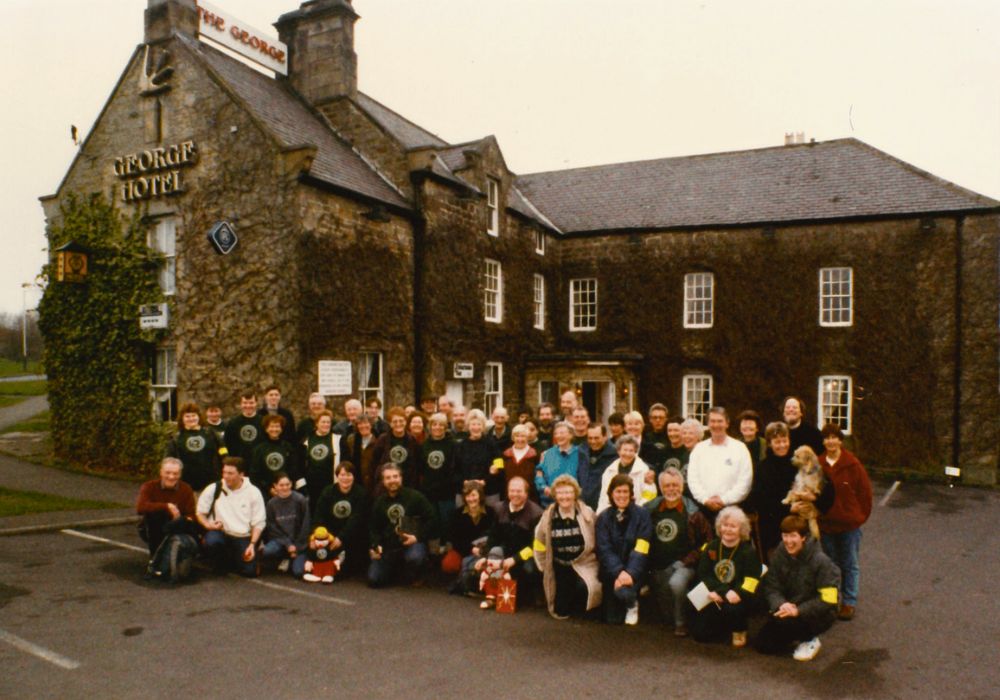
This is where it all began; the start of an annual event organised by Lesley Dodd, which continues to this day. 138 walkers set off from Wallsend, accompanied by the strains of a Northumbrian pipe. It would be a steep learning curve for all who took part. Could we walk 15+ miles per day for four to five days consecutively? Some of those road walks seemed interminable back then, but we all made it; the historic landmarks and undulating scenery (including the famous Sycamore Gap tree – since felled) were stunning. St Luke’s Hospice was the Mayor of Harrow’s chosen charity for this year and he championed the walk accordingly.
1997: Ridgeway (87 Miles)
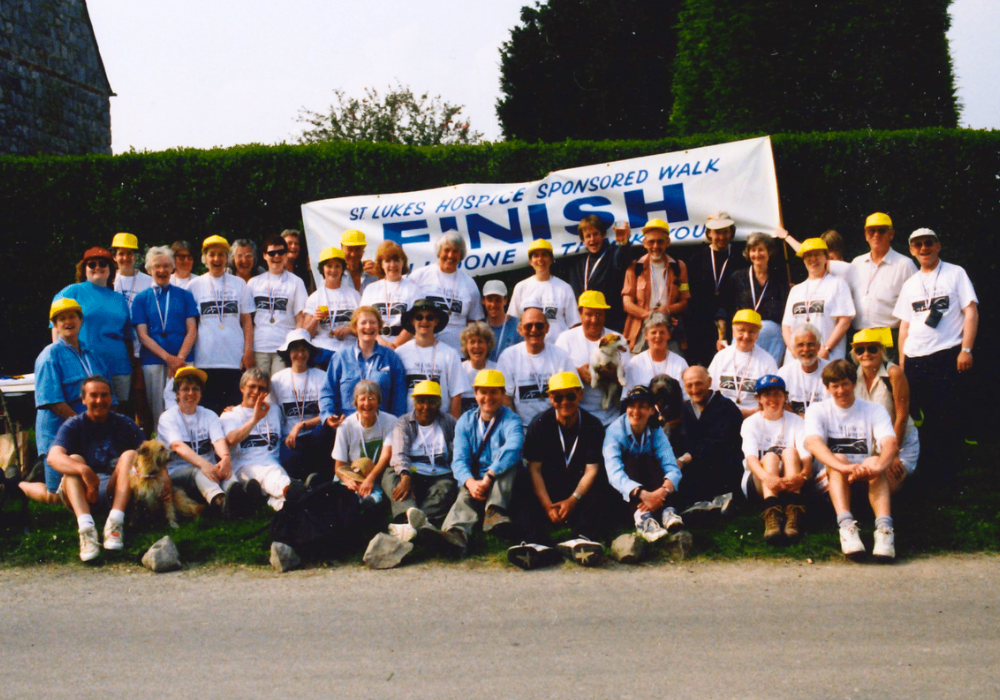
Our second walk, this time along the route of Britain’s oldest trackway. We started near to the stone circle of Avebury in Wiltshire and finished at Ivinghoe Beacon in Buckinghamshire. The walk crossed two distinct landscapes which had been designated Areas of Outstanding Natural Beauty. Very warm weather accompanied us throughout, so the going over the chalk/flint sections could be challenging at times. Quiet bluebell-adorned woodlands and chalk grasslands, along with interesting sites, such as the Neolithic long barrow burial chamber of Waylands Smithy, ensured that this was indeed a very memorable walk.
1998: South Downs Way (77 Miles)
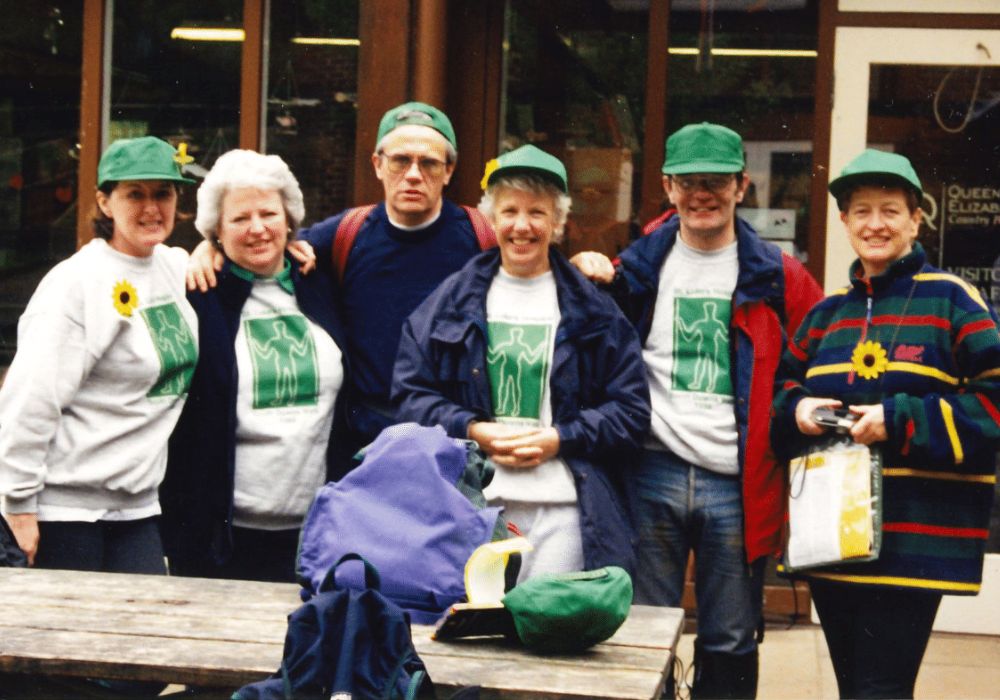
Starting at the Queen Elizabeth Country Park, Petersfield, the walkers tackled up to 77 miles along the chalk ridge of the South Downs, over 5 days. This was a fun walk; we were accompanied by the prestigious “Bishop of Bow Locks” for much of the route. For two of the walkers, a romance began, which endures to this day. The route was known for its varied landscape, including rolling hills, woodlands and coastal areas. The last day’s walking was particularly lovely, as we followed the meandering Cuckmere River to the coast, before traversing the Seven Sisters to finish at a welcome pub/café near Beachy Head.
1999: Ridgeway (87 Miles)
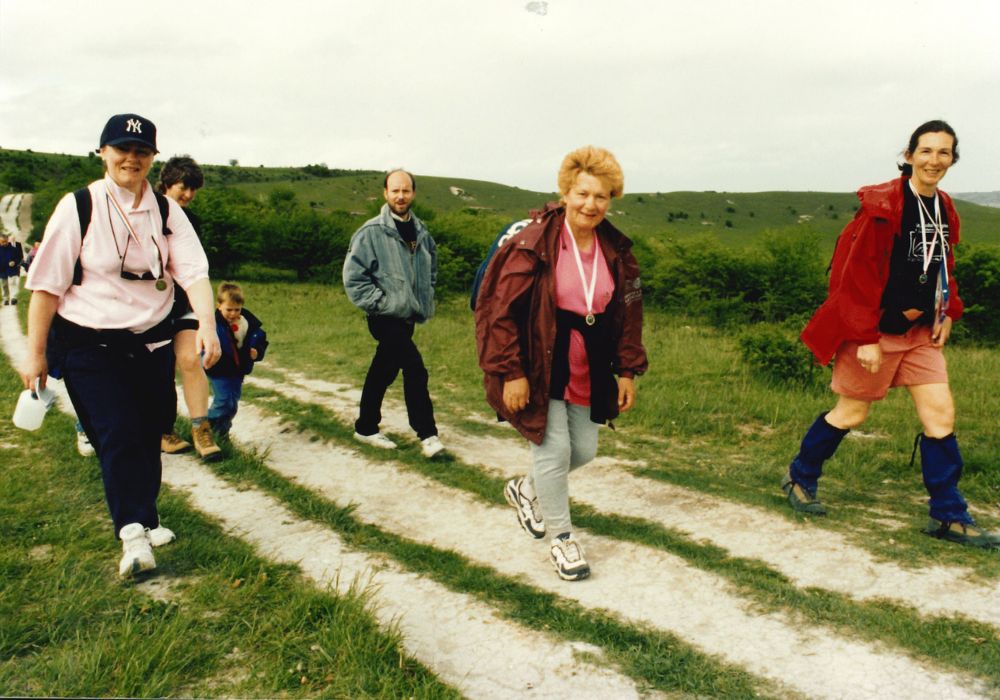
Ivinghoe Beacon to Avebury. 64 walkers took part this year and the Ridgeway was chosen again, but this time in the reverse direction. On the ground, not surprisingly, very little had changed, but certain memories stand out: the need to wear sunglasses to combat the sun gleaming off the chalk landscape, the vividness of the beautiful fields of yellow rapeseed and the vibrancy of the bluebell woodlands. We were eventually welcomed into Avebury by the sound of bell-ringing at the local church. By this time, the total raised by these early walks had reached almost £200,000. There would be no stopping us now!
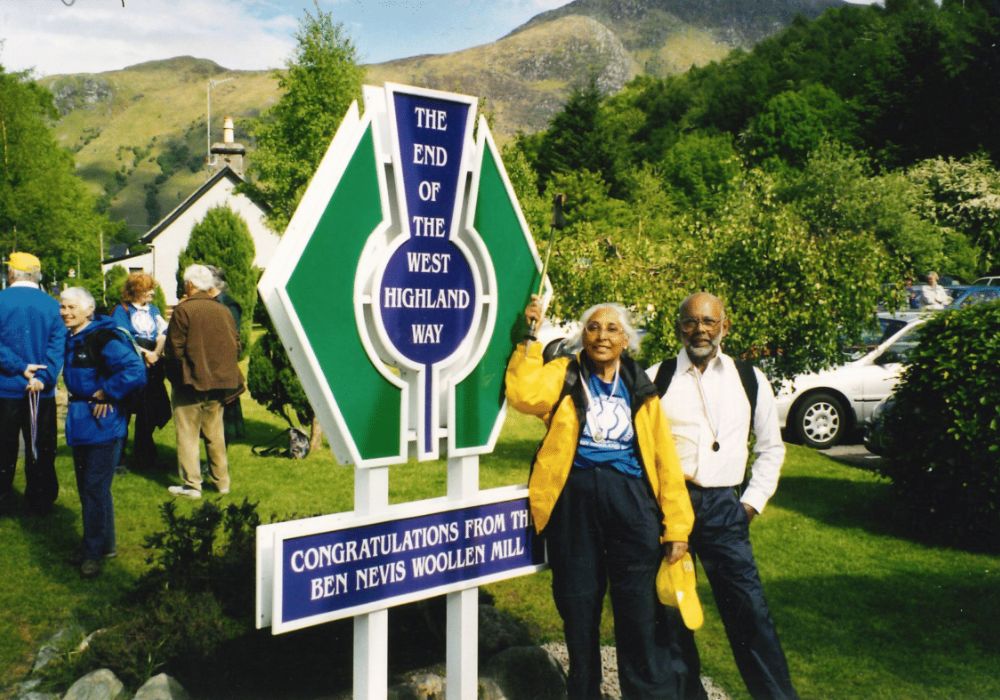
2000: West Highland Way (96 Miles)
The Big One! A special walk of 96 miles to mark the Millennium. Travel was by train as well as by coach. Five full days were spent walking the route from Glasgow to Fort William. This was a lovely, scenic route incorporating lochs, woodland and moorland. Notable memories include a boat trip across Loch Lomond and the wilderness of Rannoch Moor. It was tough going overall, averaging up to 18 miles per day, and always accompanied by light Scottish rain showers. We were given a day off from walking before the return journey to London and, for some, it was the ideal opportunity simply to climb Ben Nevis!
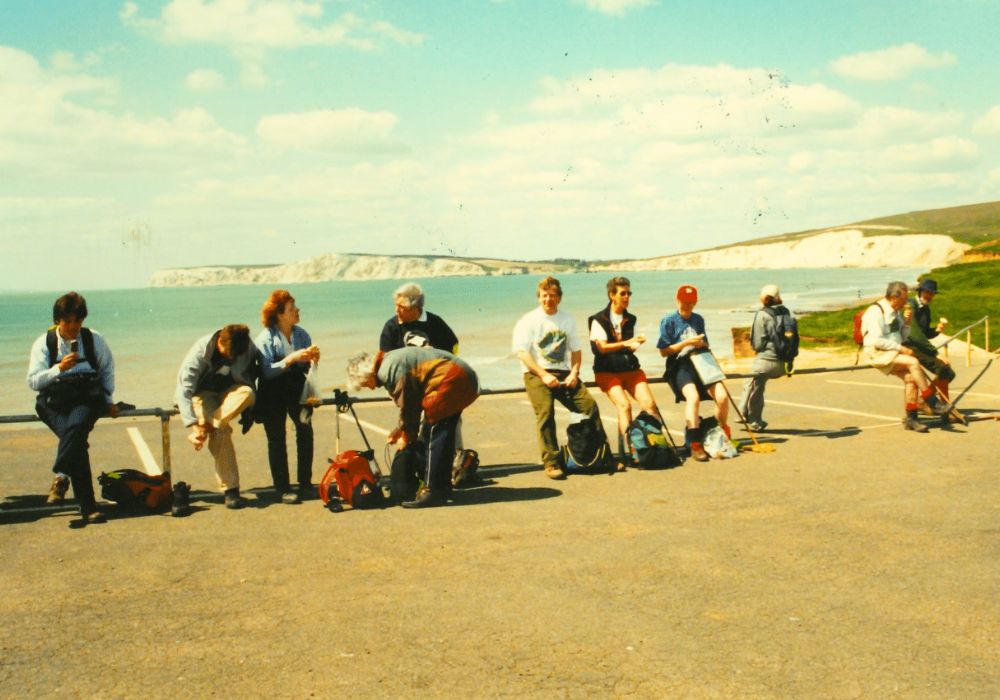
2001: Isle of Wight Coastal Path (70 Miles)
We were back in the South again this year, to tackle the circular route of the Isle of Wight Coastal Path. Described as a well-marked route following pubic footpaths and minor lanes, we set off thinking that this walk would be easy. However, this was the year of the Foot and Mouth disease that was prevalent throughout the U.K. For us, it meant revising many aspects of our route to avoid the farm/cattle communities. Coastal erosion also necessitated a number of diversions. Although parts of the route were compromised, the basic concept of circumnavigating the island was duly achieved.
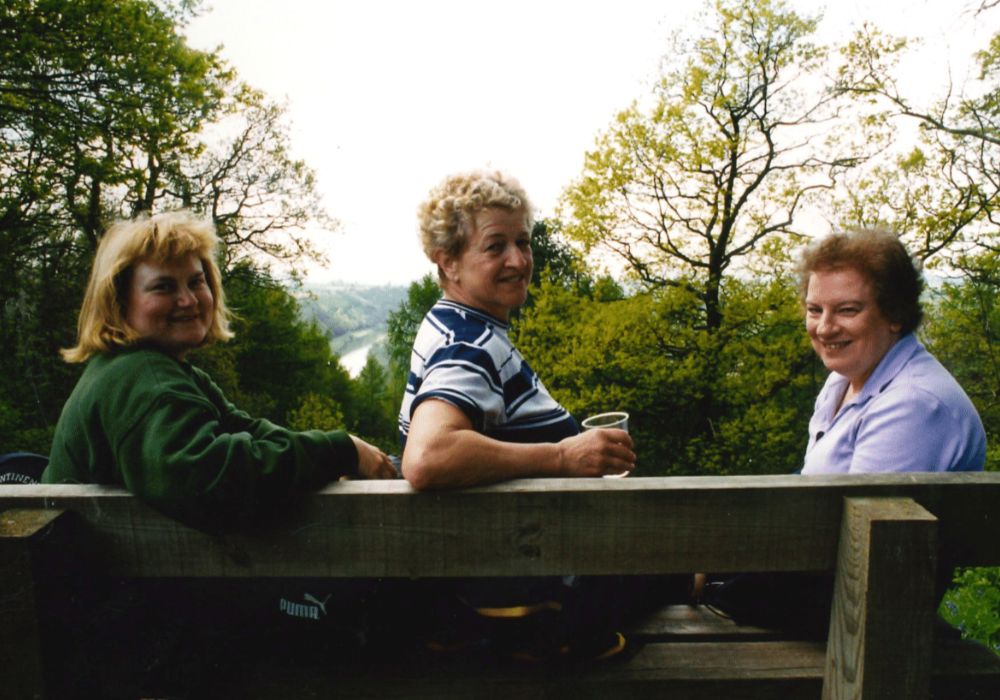
2002: Wye Valley (76 Miles)
A trail full of contrasts, from deep limestone gorges capped with ancient woodland, through water meadows and apple orchards. 70 walkers tackled the route from Chepstow Castle near the river estuary, to finish at Hay-on-Wye, just over the border into Wales. Early on in the route, Symonds Yat Rock provided a spectacular view over the meandering river, with an opportunity to glimpse the peregrine falcons nesting nearby. Various rope bridges across the river added to the challenge of the route. This was a much-loved walk, which remained a favourite in many people’s memories.
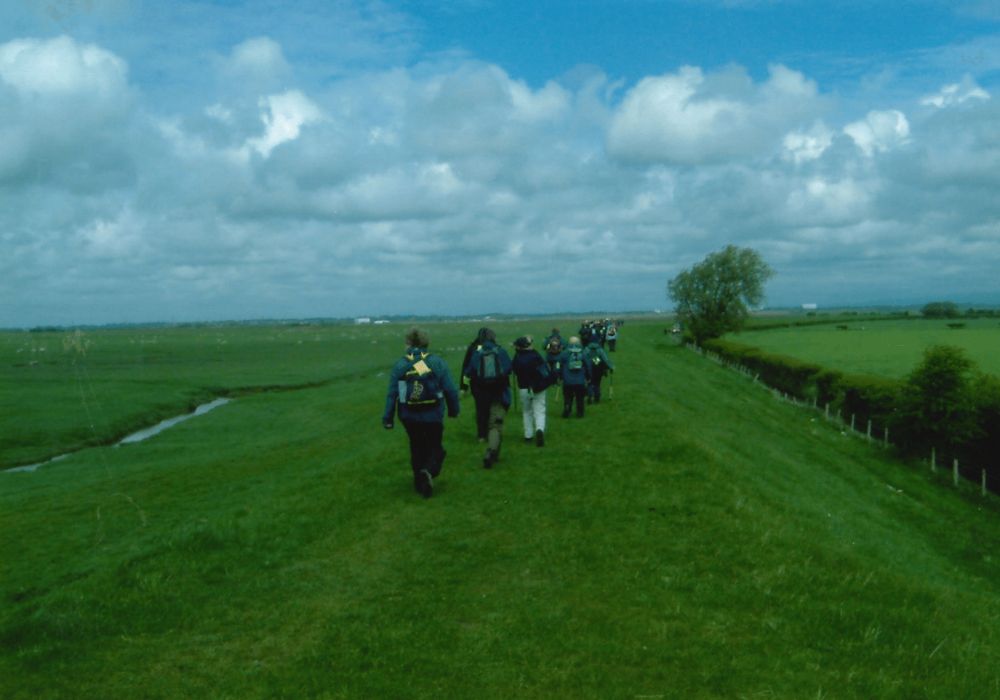
2003: Ribble Way (72 Miles)
Possibly one of the wetter walks, if the memory serves well. 79 walkers took part, starting at Longton, Lancashire and finishing at Ribblehead in Yorkshire, where the viaduct loomed out at us from a grey, mizzly landscape. The high dry-stone walls necessitated the crossing of many ladder stiles, with one blind walker being brilliantly helped by his sighted friend. The walkers equip themselves to deal with all climatic conditions likely to be encountered so, to be fair, the brighter days balanced the wetter ones and this valley walk stays in the memory for all the right reasons.
2004: Dorset Coast Path (82 Miles)
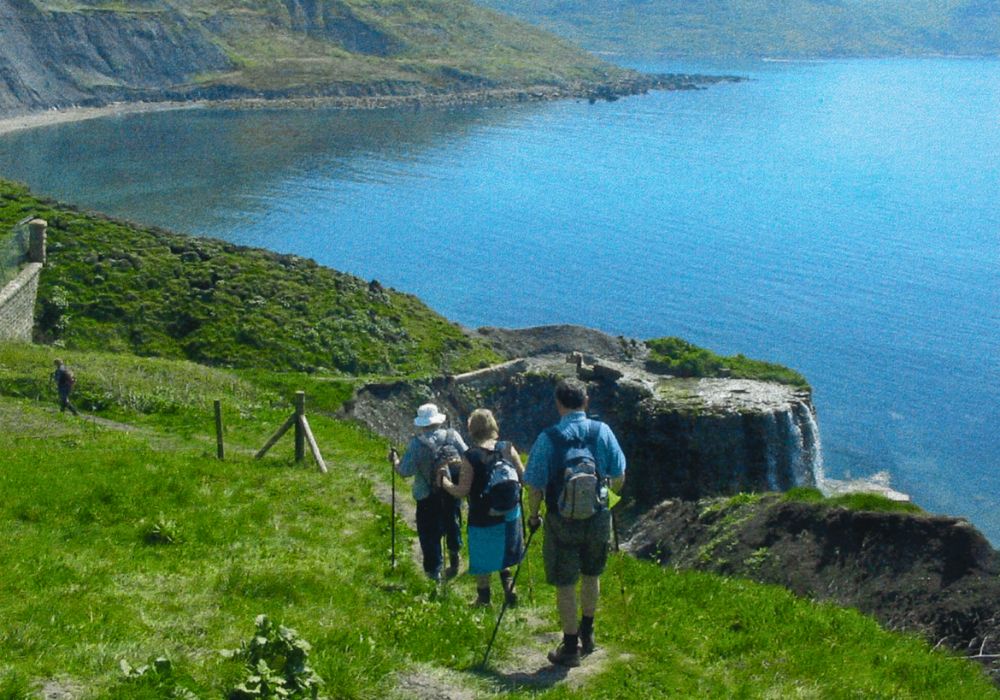
South of England again, and a departure from inland routes. Over five days, 84 walkers attempted this challenging route. The navigation was easy; just keep the sea on the right, and you can’t go wrong. The path from Charmouth to Swanage provided the walkers with a glimpse of the Jurassic and Cretaceous periods of the Earth’s history. Classic landforms such as the Durdle Door arch greeted us en route and sometimes steps had been specially installed to make the steeper sections more manageable. Despite early rain, the weather brightened and the sea was at its bluest. Lovely memories!
2005: Hadrian’s Wall (2) (81 Miles)
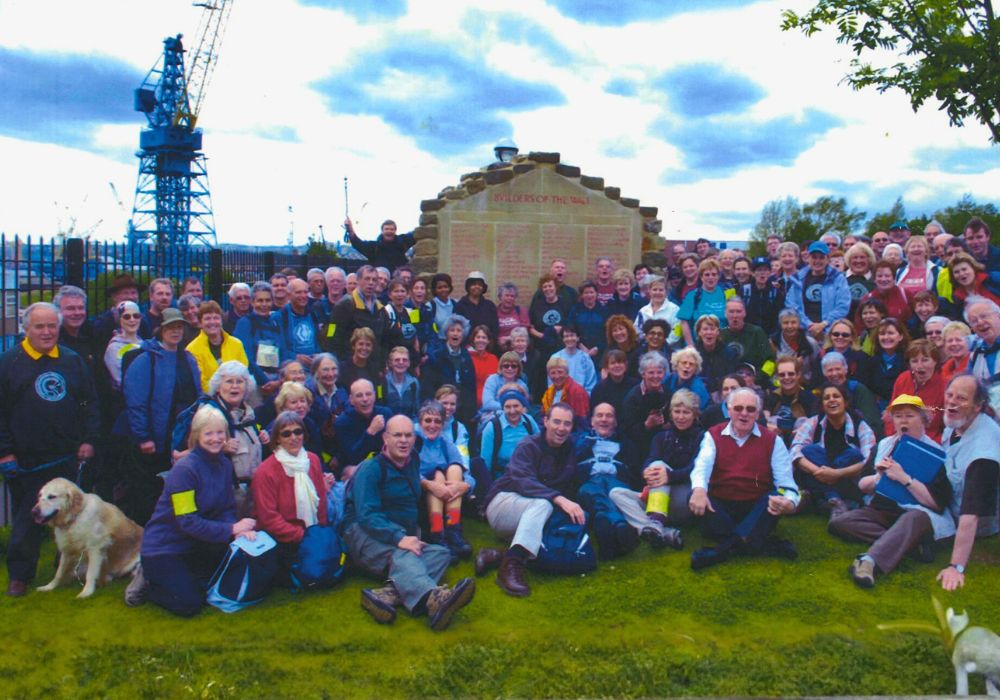
Name ring a bell? Well, that’s because we decided to go back to walk the wall again, to celebrate the 10th Annual Walk. This proved a popular choice, as 118 walkers signed up. We again walked westwards from Wallsend to Bowness-on-Solway. Things had changed in 10 years; a National Trail had been established, so there was now a clearly marked path, which replaced much of the original road walking. Many good memories endure. The remains of that wonderful testimony to Roman occupation were still clearly evident on many parts of the route, dominating aspects of the hilly landscape. Well worth the second trip!
2006: Weald Way (76 Miles)
This route was chosen because it passes through three Areas of Outstanding Natural Beauty, connecting the Thames Estuary with the English Channel, through the Weald of Kent and Sussex. This attractive route spanned chalk downland, river valleys and wooded farmland in often remote countryside. 44 walkers started at Gravesend and trekked southwards to finish at Beachy Head. The scenery was indeed varied and the walkers enjoyed the concept of interpreting the route where signs and waymarks were sometimes lacking. Everyone made it to the finish, and that was in the pre-digital map days!
2007: Wicklow Way (82 Miles)
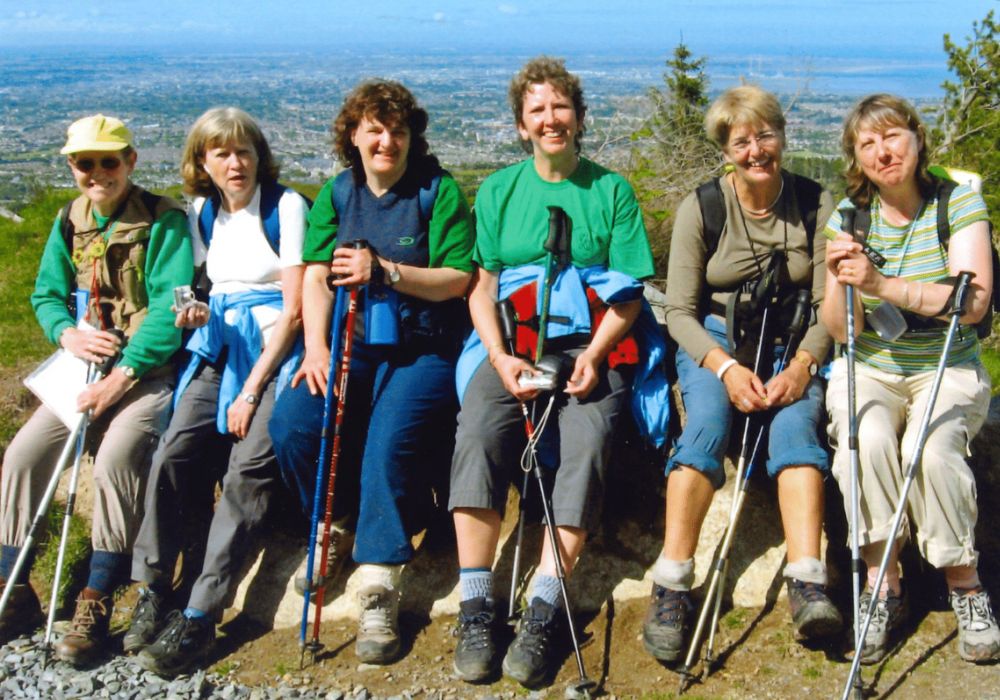
This year Ireland was our destination. This took some organising by Lesley and her team, as fast ferries had to be booked, as well as accommodation for a goodly number of walkers. The walking was wet on occasions, but those Wicklow Mountains provided a variety of scenic experiences, including upland lakes, steep-sided glacial valleys and fast-flowing mountain streams. Walkers appreciated the boardwalks, which helped them traverse the remote and boggy moorland sections. Great camaraderie prevailed at all times, with every condition being greeted with a smile. We finished in Dublin’s attractive suburban parkland.
2008: Cumbria Way (70 Miles)
The weather gods were kind to us this year. The pre-walk forecasts for this part of the country had indicated a lot of rain, but we managed to escape about 95% of the wet weather. Our five days’ walking took us from Ulverston in the South of Cumbria to Dalston in the North. Much of this linear long-distance footpath lies inside the boundaries of the Lake District National Park. It was primarily a low-level route, but there were a few high-level exposed sections, which provided a welcome challenge. We encountered majestic mountain scenery, lakes, tarns, woodland and glaciated valleys. An ideal walk.
2009: MacMillan Way (68 Miles)
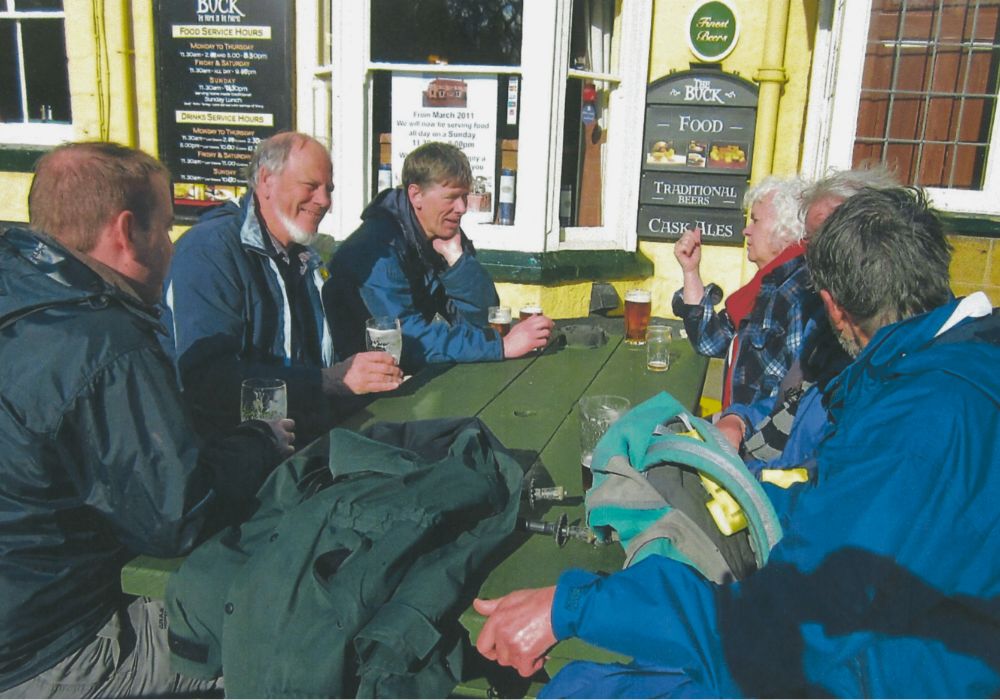
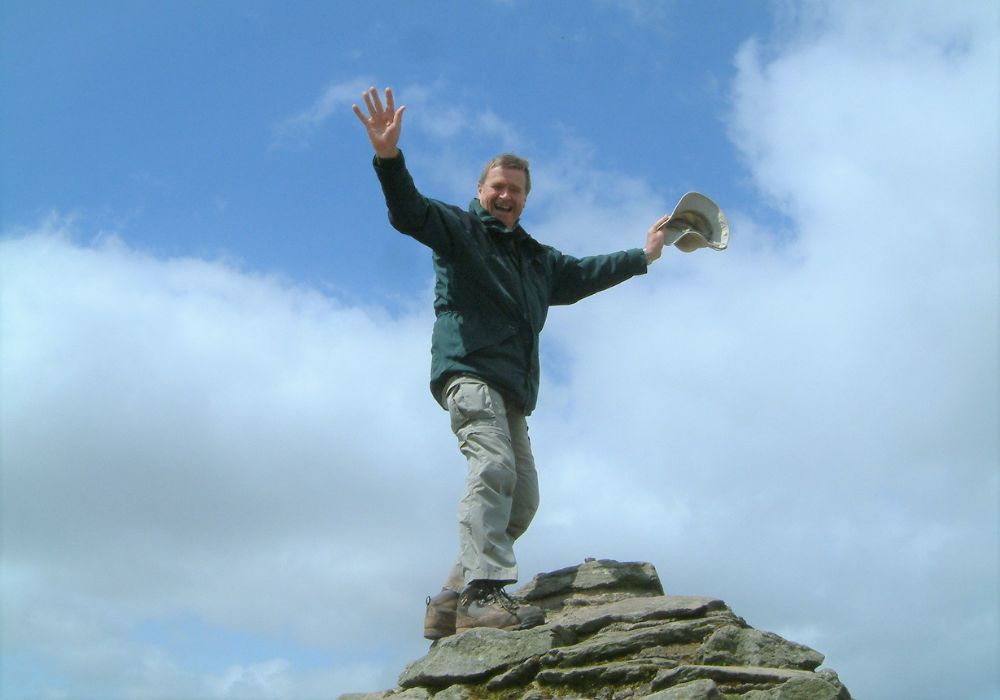
Starting at North Petherton in Somerset and finishing at Landkey in Devon, 90 walkers participated in a walk along the MacMillan Way (West), which involved some lovely trekking across Exmoor. This was an interesting and varied route, which incorporated moorland, woodland and coastal walking. Some steeper bracken-covered sections certainly kept us fit. We benefitted from good accommodation and enjoyable pubs, whilst plenty of ongoing camaraderie continued to prevail. Several new walkers joined the established ones this year, only to find themselves coming back regularly thereafter to join in the Annual Walk.
2010: Great Glen Way (77 Miles)
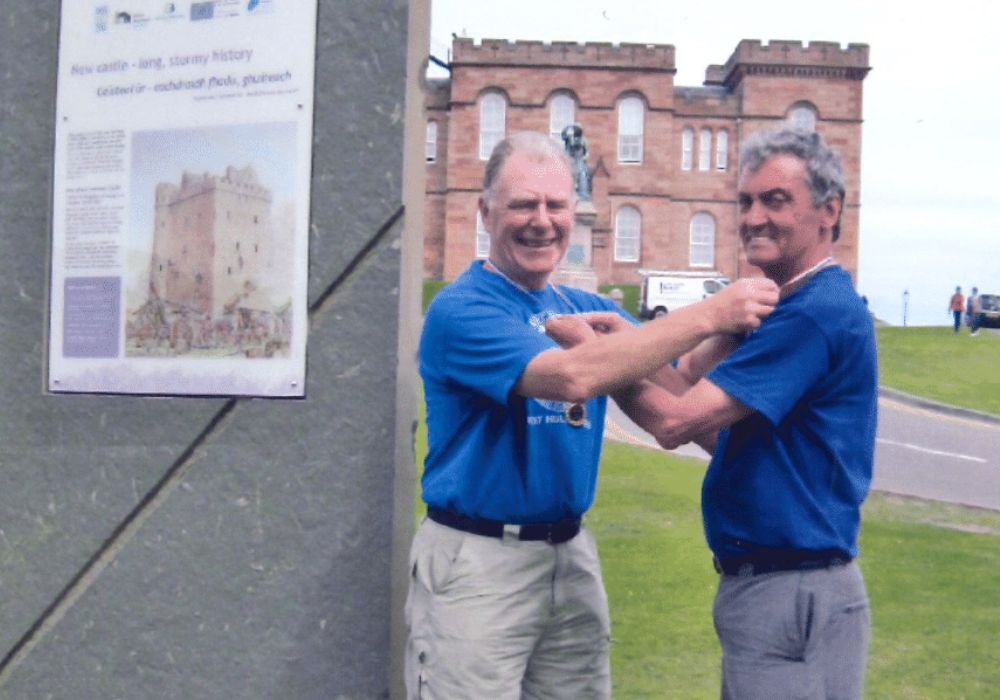
Back to Scotland again to walk the Great Glen Way, which runs from Fort William to Inverness. It follows the Great Glen fault line, passing along the Caledonian Canal and Loch Ness. The walkers were based at Drumnadrochit to cover the route over five days. The walk began with a day of flat landscape along the canal and then four days traversing the ancient hillside path that follows the loch from Fort Augustus to the finish at Inverness. The undulating path passed through wooded scenery, with glimpses of Loch Ness in many places. No monsters were seen, but we nevertheless felt that we were walking somewhere rather special.
2011: Shropshire Way (68 Miles)
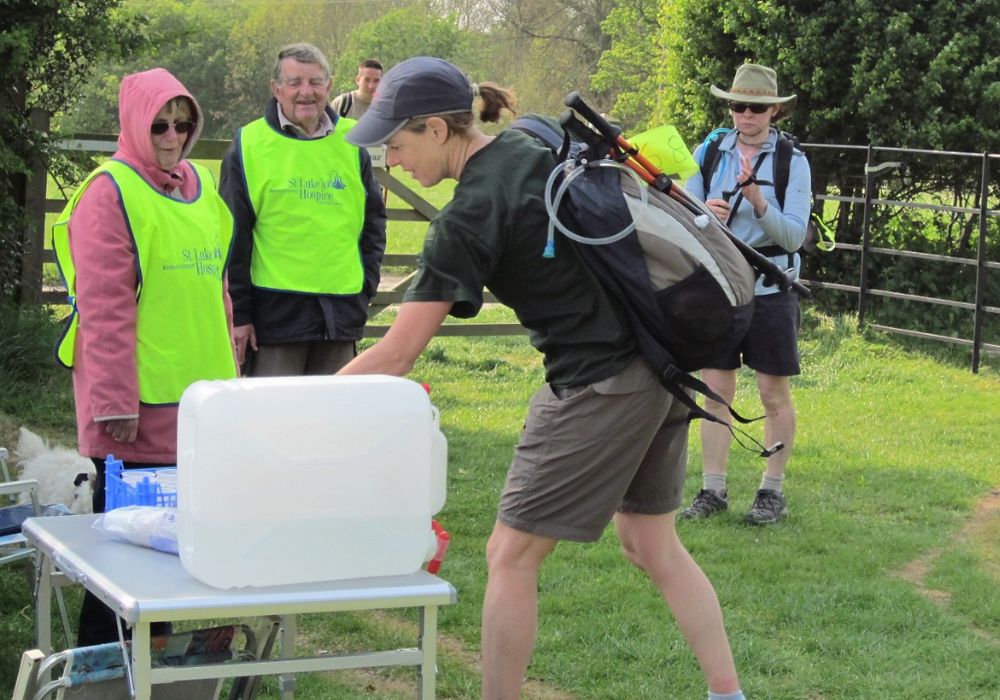
We were not quite in Wales, but came very close. This was a relatively challenging set of routes, carefully selected to represent as much of the entire Shropshire Way as could be covered by 90 walkers in five days. The windy heights of the Long Mynd and the jagged Stiperstones were among the highlights, while our final descent of the beautiful Carding Mill Valley demonstrated the classic scenery which accompanies a river in its “early” stage. This was hard going in places, but a walk not to be missed. A certain royal wedding (William and Catherine’s) coinciding with the walk provided a cause for celebration.
2012: Cleveland Way (72 Miles)
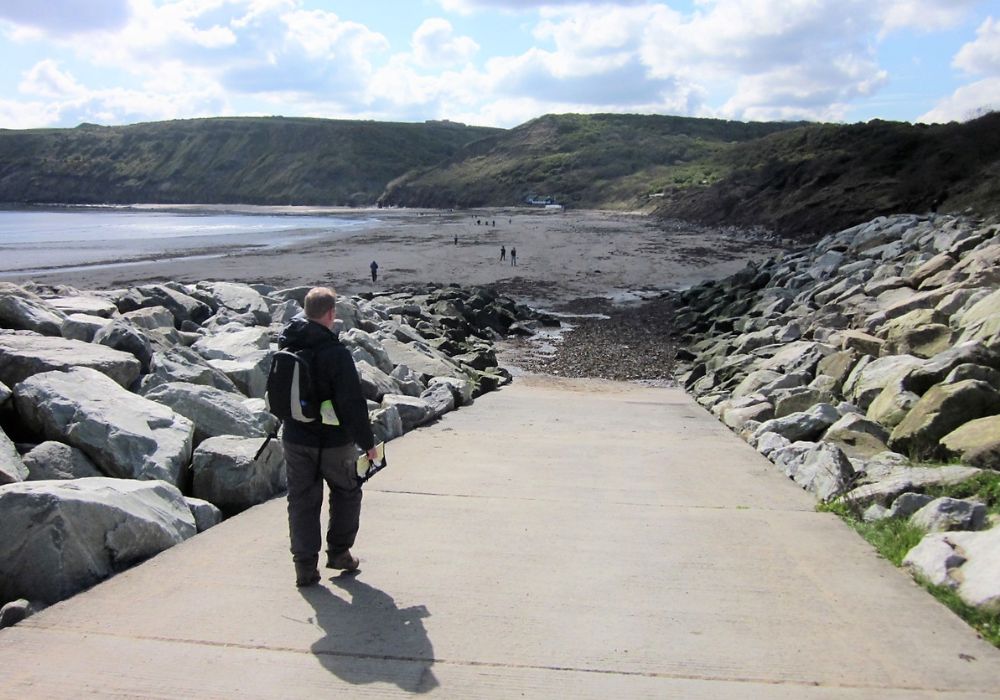
Known as the John Corner Memorial Walk, in memory of our recently departed fellow walker and founding Chairman of the hospice. This route started at the market town of Helmsley, continued across the North York Moors National Park and ended at the seaside resort of Whitby, with its ruined abbey. We trekked in driving rain across open moorland, but finished in lovely sunshine, which enhanced the chalk cliff landscape as we followed the coastal path to the finish.
2013: Heart of England Way (78 Miles)
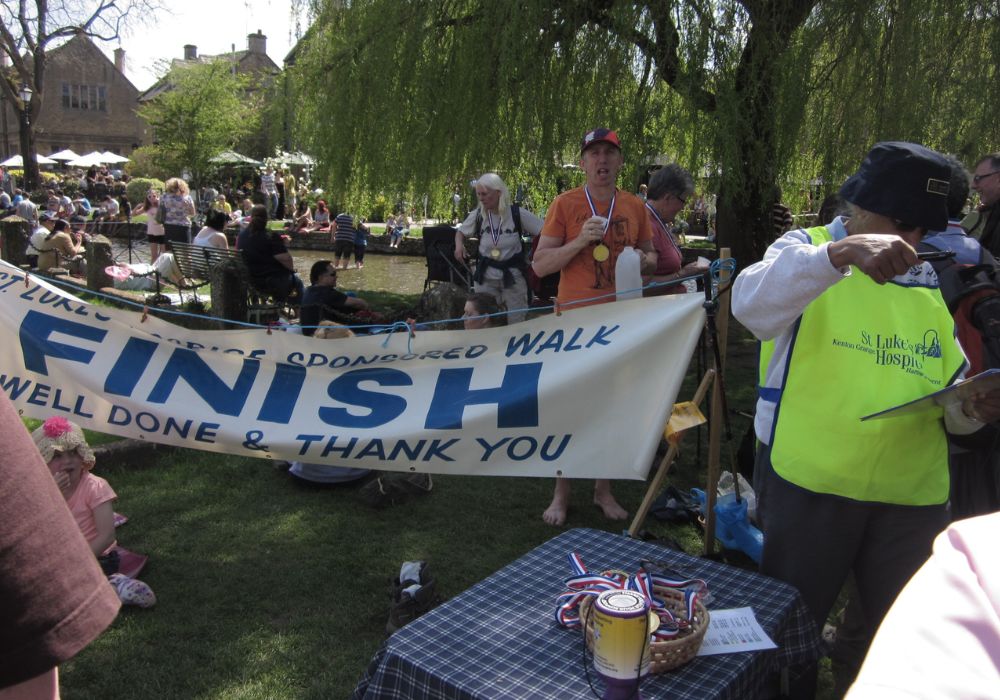
We began this walk at Cannock Chase in Staffordshire and eventually finished at the touristy town of Bourton-on-the-Water in Gloucestershire. Cannock Chase was a lovely starting place, having been designated an Area of Outstanding Natural Beauty, and managed for its important ecology and recreational use. Overall, this was one of our more genteel walks, with the route incorporating undulating farmland, lowland heath and attractive Cotswold villages. Not too challenging, but a very satisfactory walk.
2014: Peak District Challenge (74 Miles)
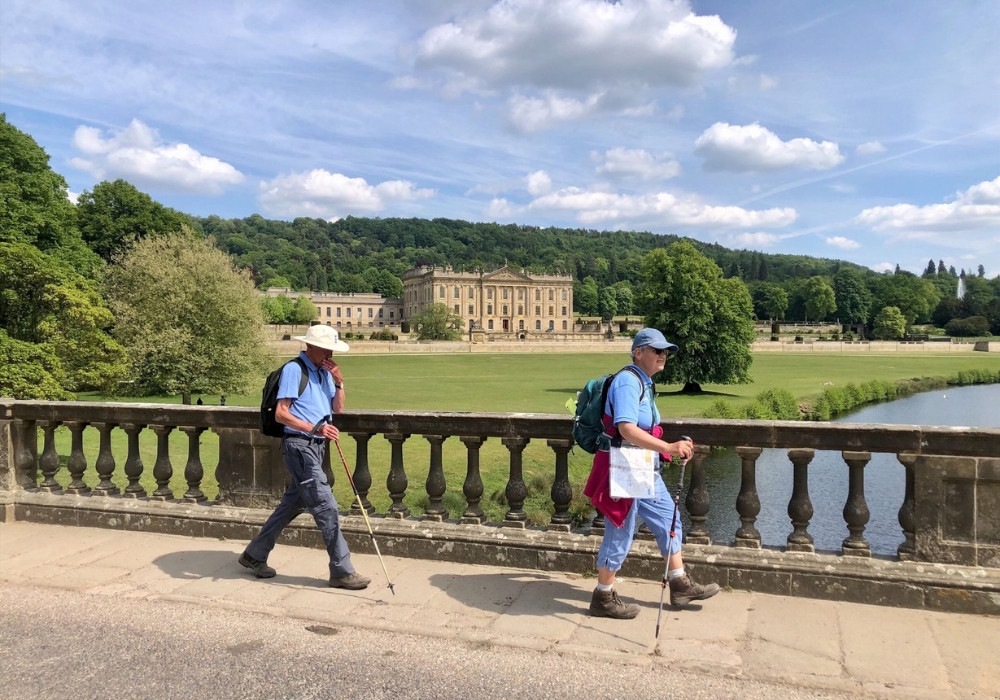
To Derbyshire this year, to tackle routes across England’s oldest National Park. Portions of two established Peak District trails were linked to provide a variety of walking conditions and scenery. The route took the form of an inverted “U”, from Rocester to Matlock via Castleton. Some of the hill climbs were indeed challenging and many stiles of various designs provided added interest. Limestone hills and dales, along with the beautiful landscape around Chatsworth House made for captivating walking.
2015: St Cuthbert’s Way (62 Miles)
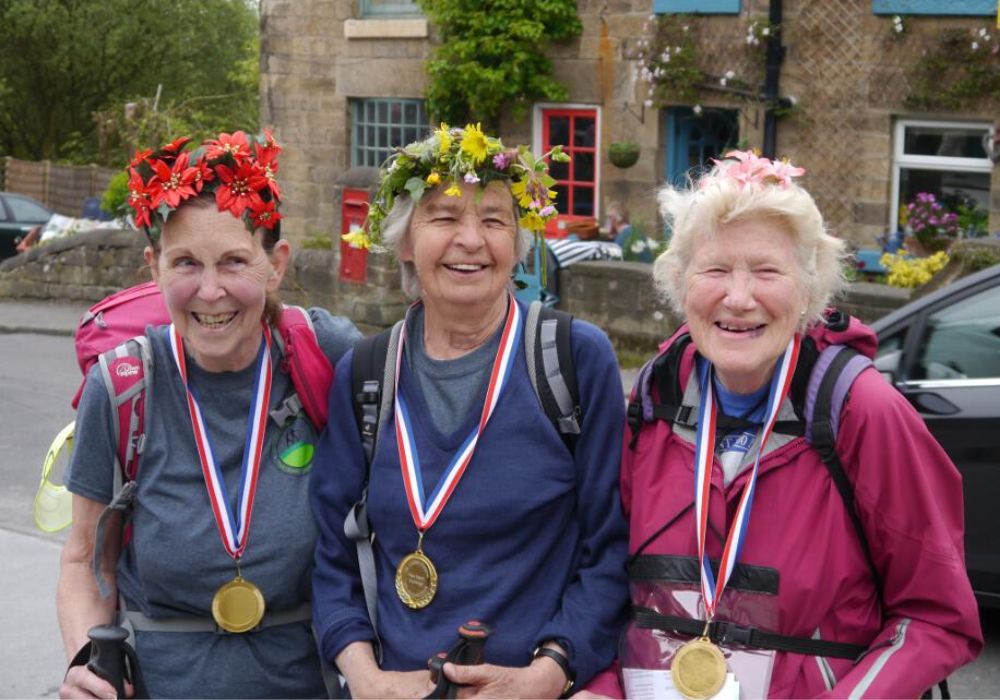
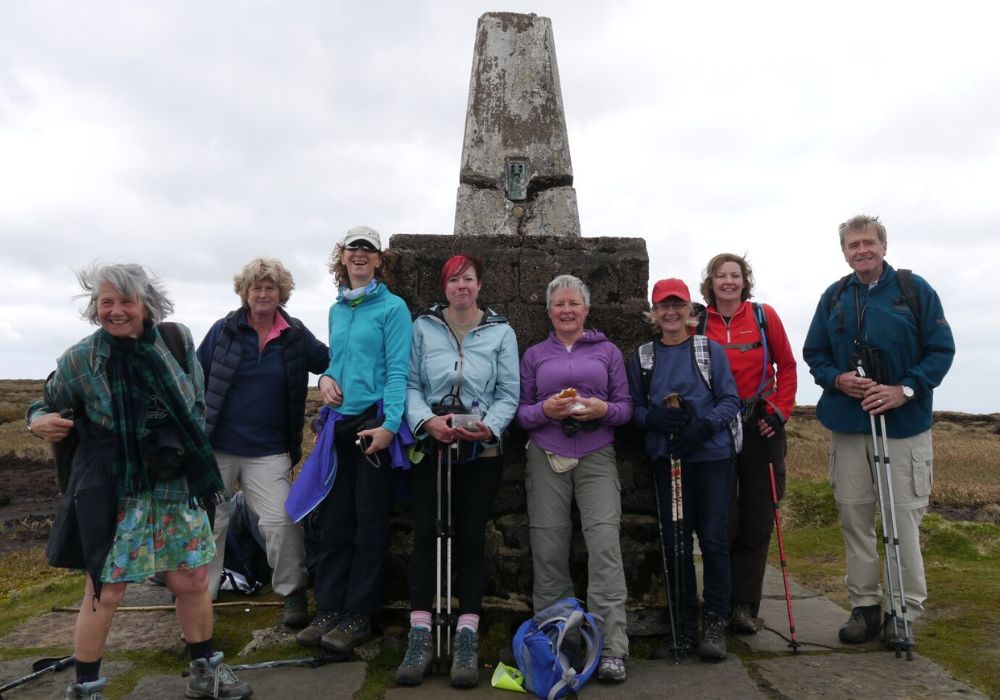
The 20th and final walk which Lesley organised, and a fitting testimony to the effort she had put into arranging all the Annual Walks since their inception. This walk had to have a difference…. and it did. Dynamic mountain landscape across the Scottish Borders led down to the Northumberland coast, where the route crossed the sands to the Holy Island of Lindisfarne. 118 walkers took part. The total raised over 20 years of Lesley’s management had reached £1.5 million!
2016: Poppy Way (82 miles)
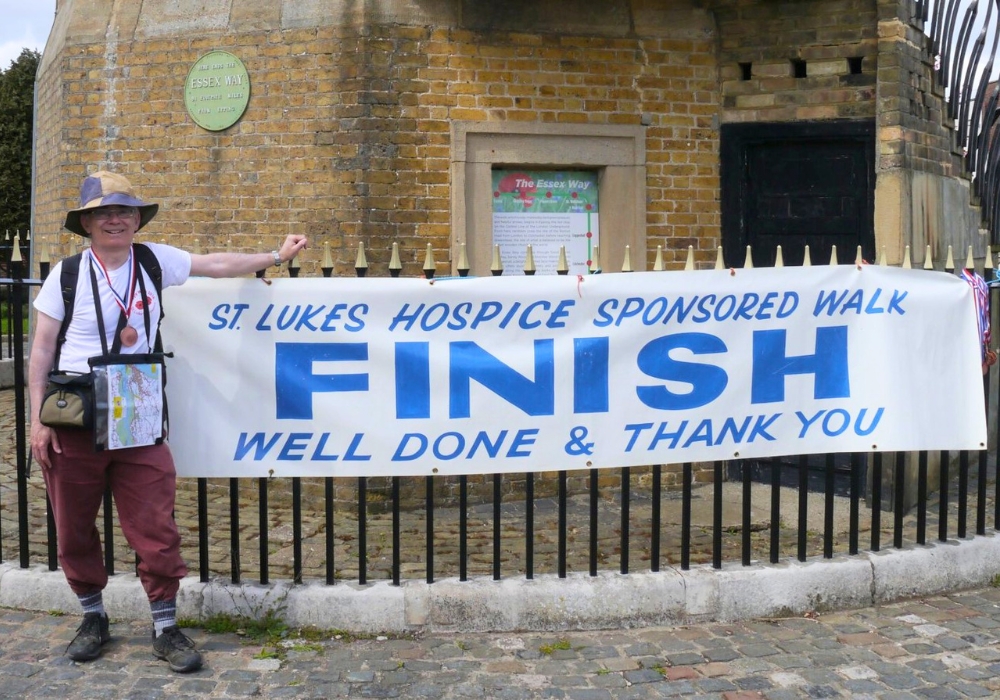
More commonly known as the Essex Way, this route crossed the county mostly on rural paths from Epping (just outside the M25) to Harwich on the east coast. The Way headed across gently undulating agricultural land (festooned in places by swathes of poppies), passing through or near many attractive old villages, including Dedham, which had connections with the painter John Constable. This was the first walk of the post-Lesley era. A pleasing number of new walkers joined this year. The walk was rewarding, if not too challenging, with pleasant, varying scenery which included a bracing finish as we followed the Stour estuary to finish by the sea.
2017: West Devon Triangle (72 miles)
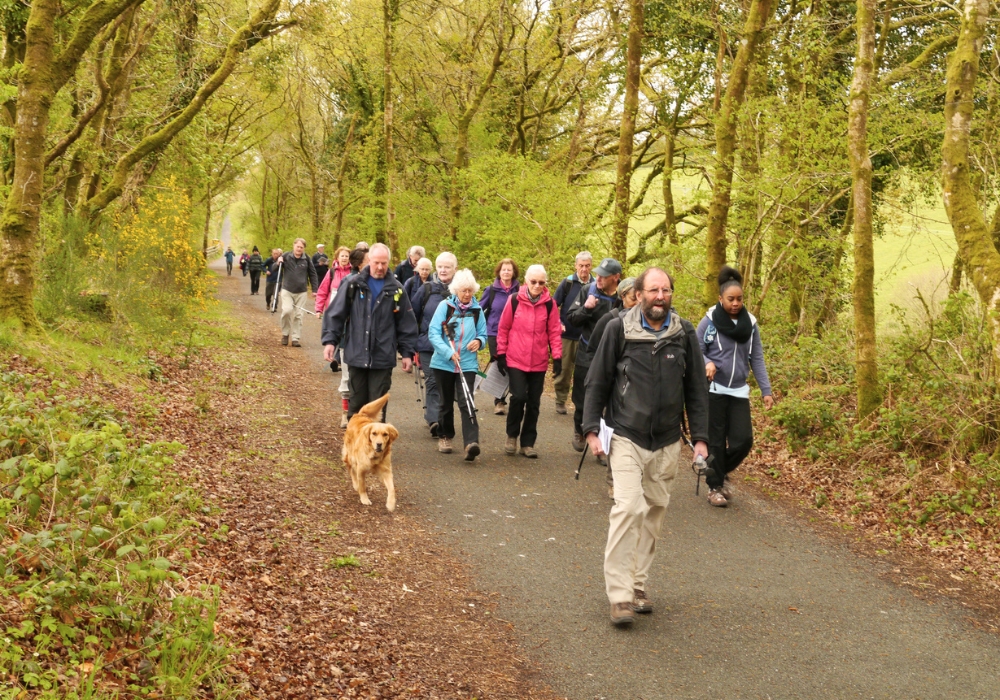
We went back to Devon this year to follow a ‘concocted’ route which formed a basic triangular pattern. We were based in very pleasant accommodation, a hotel in Plymouth with excellent sea views. From here, we embarked upon paths that took us through attractive villages (eg Lifton and Bridestowe) to eventually finish at Calstock in Cornwall. A fair amount of road walking came into play and some of the hills were relatively steep. There was rain to contend with at times, but green fields and pleasant woodland paths ensured that this was a very memorable walk.
2018: South Downs Way (77 miles)
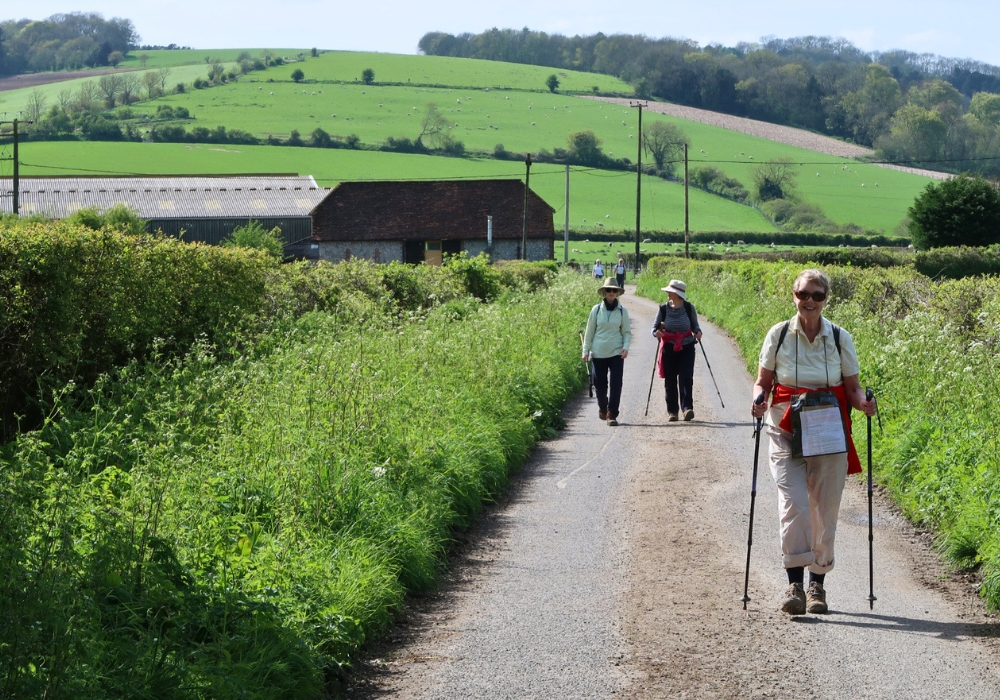
This was a walk based upon the decision to repeat the one carried out so successfully back in 1998. Twenty years had passed, but the route hadn’t changed. We again started at the Queen Elizabeth Country Park (in Hampshire) and travelled south-eastwards, following the lovely South Downs hills to finish at Beachy Head. This walk was somewhat challenging due to the dry, warm weather which accompanied us for 5 days. Sun-cream, suitable attire and appropriate amounts of drinking water were essential, but all the walkers who took part paced themselves sensibly and enjoyed the second experience of this rather lovely route across the south of England.
2019: Dales Way (63 miles)
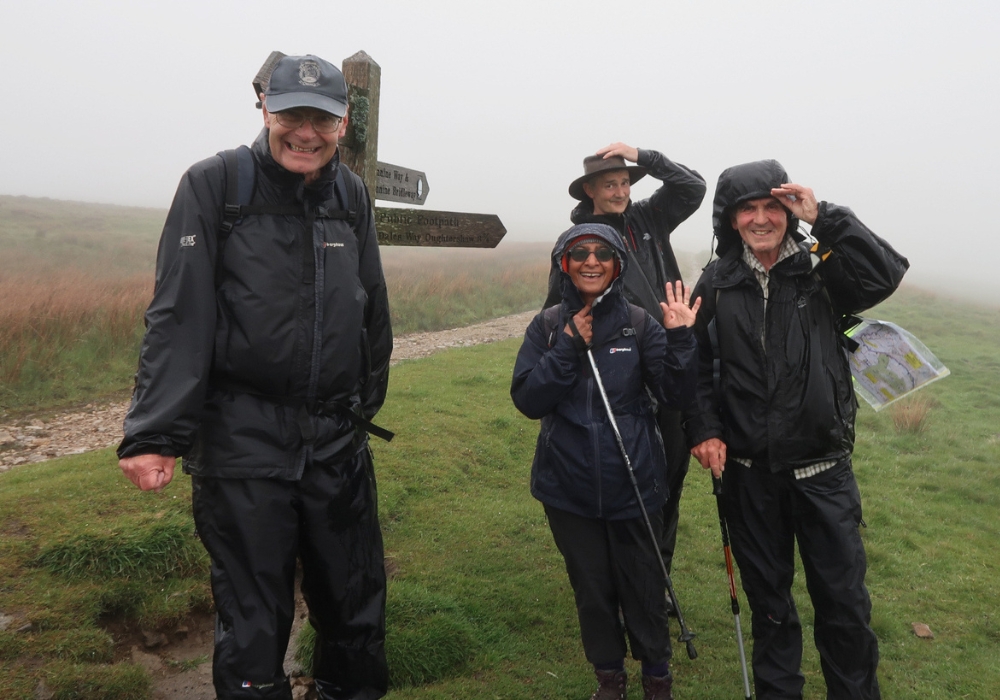
One of the favourite walks undertaken. We covered a large section of the whole route, starting at Beck Foot in Cumbria and finishing in parkland at Ilkley, Yorkshire. The beauty of this walk lay in the fact that much of the route passed through the heart of the Yorkshire Dales National Park, following the river Wharfe as it meandered through gentle green countryside and a number of attractive small towns such as Grassington. The limestone-rich scenery was enhanced by dry stone walls and accessible stiles. Lesley Dodd returned (with husband Douglas) to be a guest checkpointer.
No walk for 2020 due to lockdown restrictions.
2021: Coleridge Way (51 miles)
Also known as the Lesley Dodd Memorial Walk, this was a challenging route that incorporated the stunning countryside of the Quantock hills and Exmoor, a landscape that inspired Samuel Taylor Coleridge to produce some of his best known work. The going was tough at times as a number of steep climbs had to be undertaken and the misty hill top weather made navigation difficult. However, the final day’s walking along the wooded estuary of the River Lyn in lovely sunshine provided one of the most memorable days of all the walks undertaken. This walk was a fitting memorial to Lesley, who had sadly passed away in December 2020. Douglas joined the walk in her memory and continues to support the walkers.
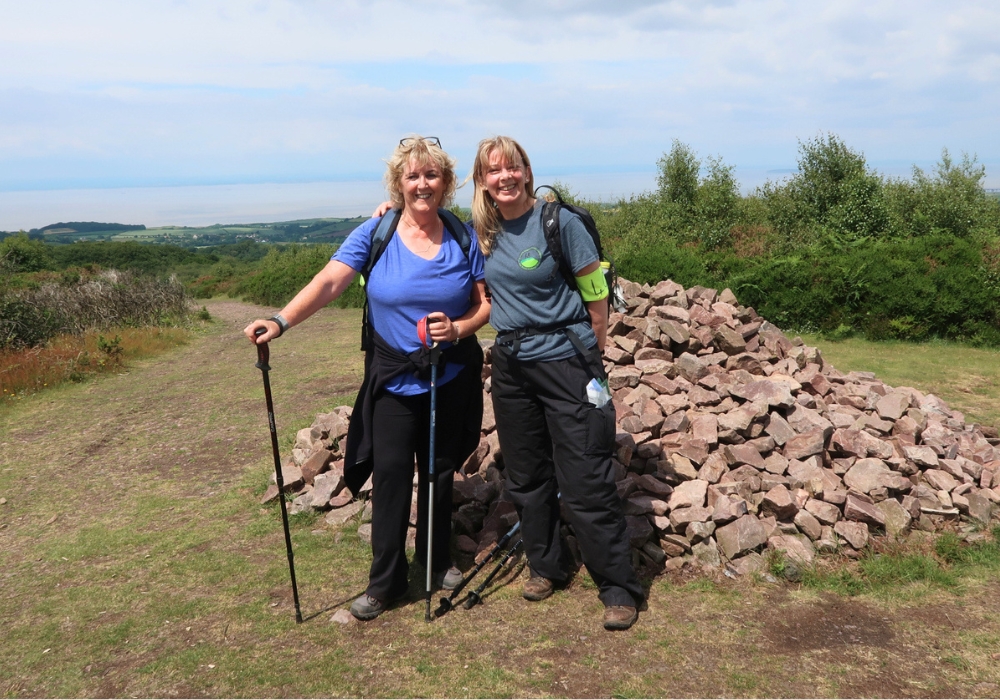
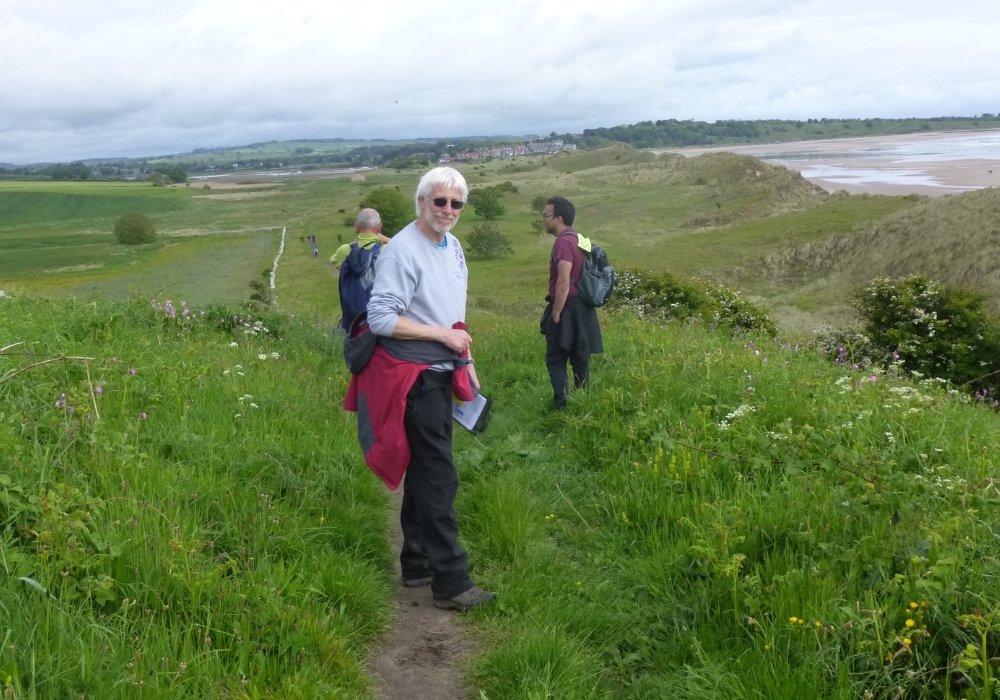
2022: St Oswalds Way (59 miles)
This was another walk to cherish. The route recalls the life and importance of Saint Oswald, who travelled the countryside in the 7th Century, playing a major part in bringing Christianity to the United Kingdom. We started at Kirkwhelpington, heading eastwards to the coast and then northwards, following the coastal path up to Bamburgh with its magnificent castle. The scenery was really varied, incorporating heathlands, wooded pine forests and coastal sand dunes. A number of digital navigation aids were used by many walkers for the first time, and they obviously worked! Nobody got lost and everyone thoroughly enjoyed this interesting walk.
2023: Isle of Wight Challenge (49 miles)
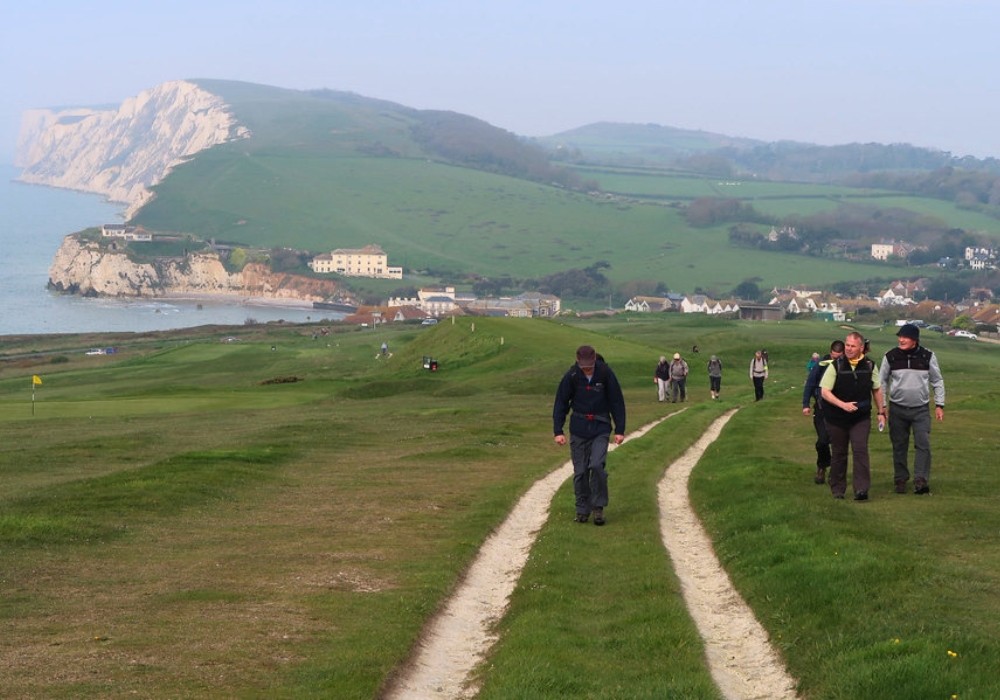
A return visit to the I.O.W. This time the walk was a concoction of routes, incorporating the established inland country paths away from the coast to the west of the island. We encountered a variety of walking conditions. The wooded valleys were particularly muddy in many places, but these ‘difficult bits’ were balanced by dry, undulating paths that followed the cliffs and allowed lovely views of the sea and coast. The weather remained warm and sunny over the 4 days we were there and this walk is fondly remembered for the excellent HF accommodation at Freshwater Bay.
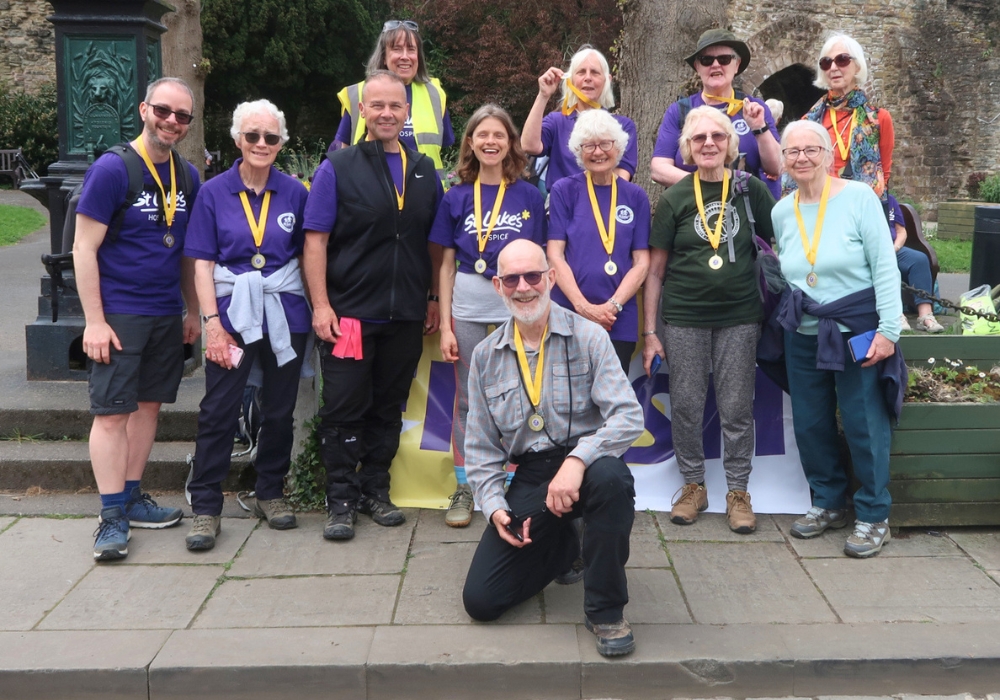
2024: Shropshire Hills Challenge (68 miles)
This was a year when the term ‘challenge’ really lived up to its name. The routes chosen were different from those we had covered back in 2014, but managed to provide us with very steep climbs on a daily basis. Starting at Much Wenlock, our route took us through the very attractive small town of Clun (with the remains of a motte & bailey castle) to finish at Ludlow (gastronomic capital of the region). There was fine scenery throughout the walk with sweeping hills, wooded valleys and gorse heathland providing many worthwhile photo opportunities. Quite hard going, but the pub stops at the end of each day eased the ‘pain’.
2025: Peak Way Challenge (58 miles)
This year, the southern section of the Peak Way took over 60 of us into Derbyshire. We started just north of Grindleford on a brilliant sunny day, with stunning views over Curbar Edge, before walking through Chatsworth Park and on to Bakewell. For the remainder of the route, we largely followed three rivers, the Derwent, Dove and Wye. The walk had its ups and downs as we passed through Matlock, with views of Riber Castle, and on to Ashbourne. A highlight for many was crossing the River Dove via the iconic stepping stones at Dovedale. The walk ended with a climb up to Monsal Head, where we took in the views before boarding the coach home.

2026: Cornish Coastal Challenge (55 miles)
Our landmark 30th Annual Walk took us to Cornwall for the first time, in a heatwave! We braved sweltering temperatures as we trekked sections of the South West Coast Path between Padstow and St Ives, and then followed St Michael’s Way cross-country from the north to the south coast to finish at Marazion, where St Michael’s Mount provided a splendid backdrop for our finish banner. Eighty-one walkers took part, including 25 new recruits. Much of the route was on cliff-top paths, sometimes passing the ruins of tin mines or along sandy beaches, where we dodged sunbathers and sandcastles. In the way of coastal paths, there were many ascents and descents to be tackled which, combined with the lack of shade and the heat, meant that a few walkers were glad of the opportunity for a paddle or a swim at the end of each day’s walking.
Find out more about how you can get involved with our annual walks by visiting our Annual Walks event page.
